
How Move With Balance works
The most effective way to improve your coordination and well-being is by exercising your brain. Find out how our exercises can help seniors experience the elder years with health and vitality.
The Exercises
You can do Move With Balance exercises almost anytime, anywhere, and as often as you like, as long as you have something sturdy nearby to hold on to if you become unsteady. In the beginning, using a chair or the wall for support will help you work on your balance safely.
Repeat, modify and progress
Participants are encouraged to repeat the exercises until the challenge becomes easier or even automatic.
Then you can improve your balance even more if you modify the exercises as you progress. Start by holding on to a sturdy chair for support. To challenge yourself, try holding on to the chair with only one hand; then with time, you can try holding on with only one finger, then no hands. If you are steady on your feet, try doing the exercise with your eyes closed.
Constantly repeating the activity and then increasing the challenge is called the progressive challenge.
The award-winning book
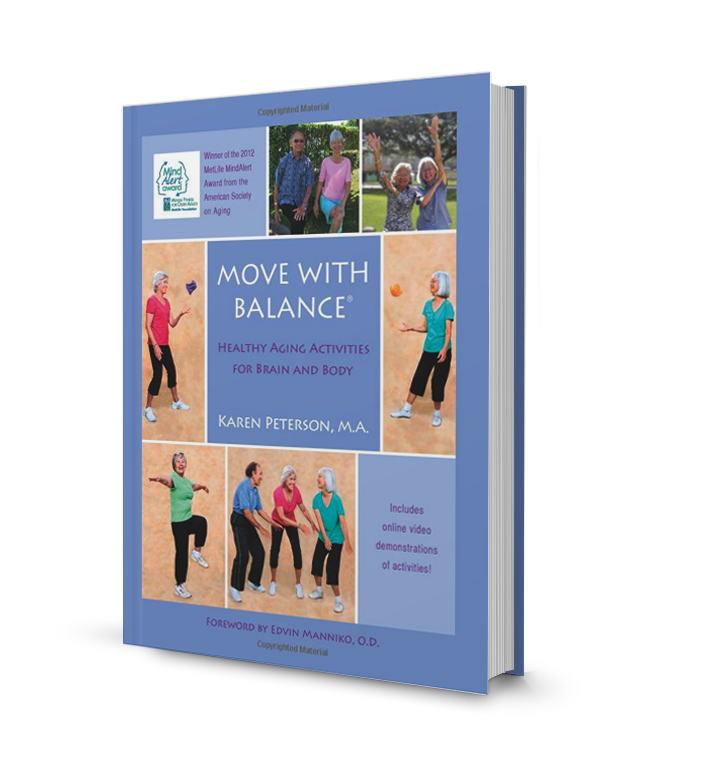
The Move With Balance book, which includes access to over 60 online instructional videos, is the cornerstone of the Move With Balance program. It features easy-to-follow colourful illustrations of dozens of movements and exercises that anyone can do, even the frailest elder. For caregivers and seniors wishing to learn on their own, purchasing the book is the first step towards reducing falls.
Learn more about the book
Learning with a partner
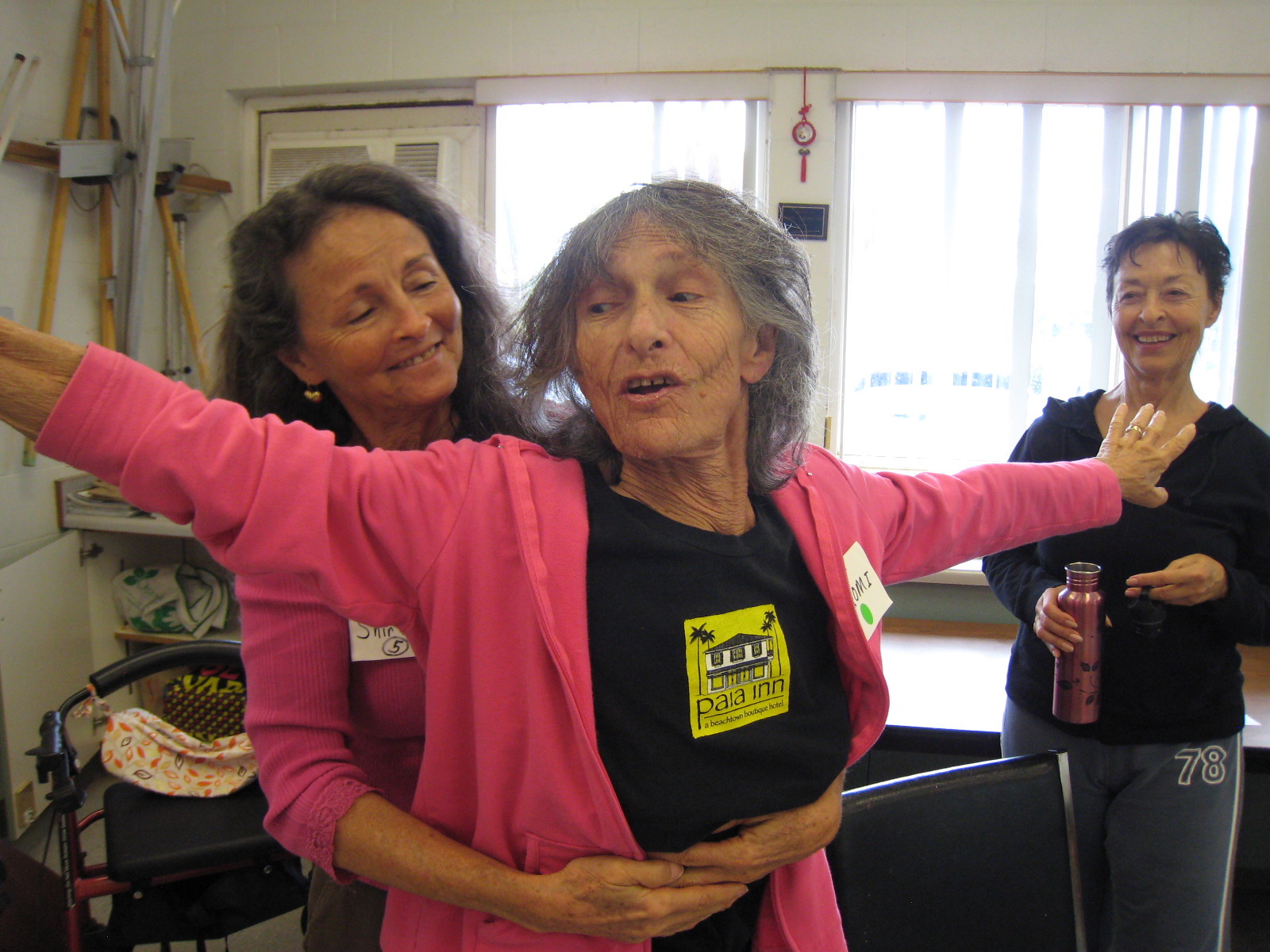
Many of the exercises in the book can be performed on your own using simple everyday props. However, self-improvement regimens are only effective if they are practiced regularly. Not only does partnering with with a peer encourage participants to maintain the exercise routine, but socialization is also hugely effective in stimulating and maintaining good mental health.
Learning with music
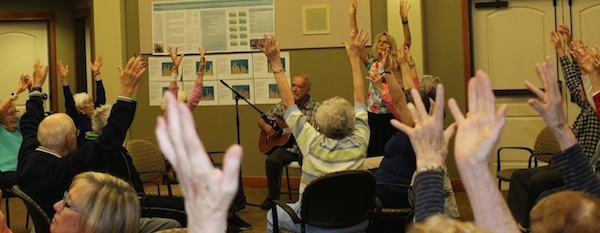
Music is a powerful tool for healthy ageing. Strong links between music and motor functions suggest that music represents an interesting aid for motor learning. Music has been shown to enhance the retention of newly acquired verbal information in normal ageing and Alzheimer’s disease (AD).
We began using music in our Move With Balance® in 2015. It was so beneficial that we now use music with all the Move With Balance exercises. We have developed a library of music that includes original songs written specifically for our program, as well as new adaptations of some of our favourites classics.
I am Love
The benefits
Exercise creates the optimal environment for neural plasticity, the ability of the brain to change. Exercise puts the brain and body into balance naturally by regulating brain chemicals that control mood and responses to stress.
Cognitive benefits observed in many of our participants:
- Enhanced cognition
- Improved memory
- Reduced stress
- Balanced mood
- Improved social skills and behavior
- Increased self-confidence
Physical benefits:
- Better strength
- Better balance
- Improved vision
- Greater range of motion
- Faster reaction time
- Improved coordination

Proven results
%
Efficacy of the Move With Balance program to prevent falls
Adapting the program to functional and cognitive needs
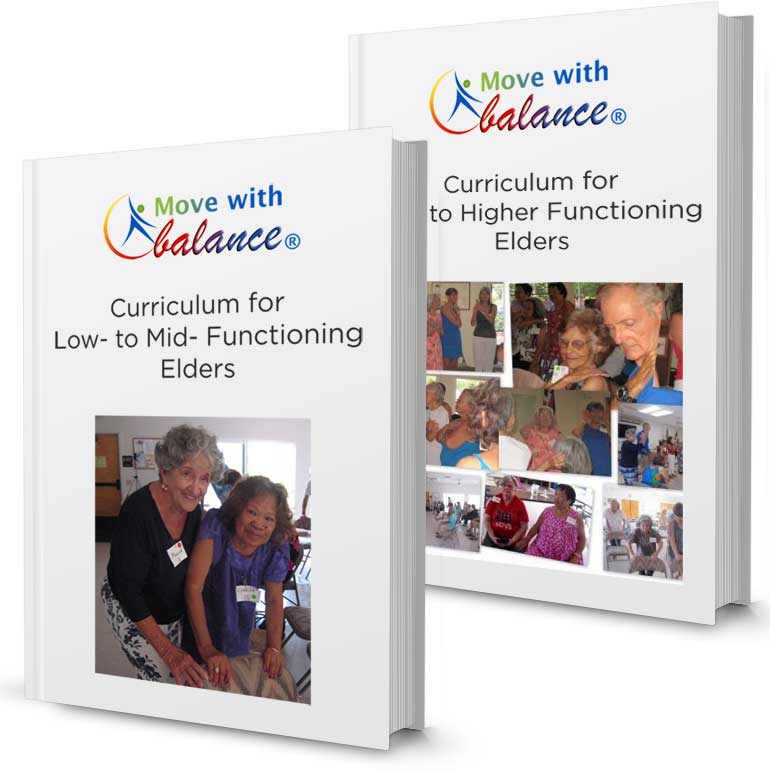
For group program and caregivers, our extra curriculums provide you with all the knowledge you could need to tailor the exercises. Each manual contains the following content:
- full lesson plan for a 10-week program
- new customized exercises tailored for your elder’s cognitive and functional abilities
- explanations on how and why each activity benefits your patient
Adapting the program to cultural needs
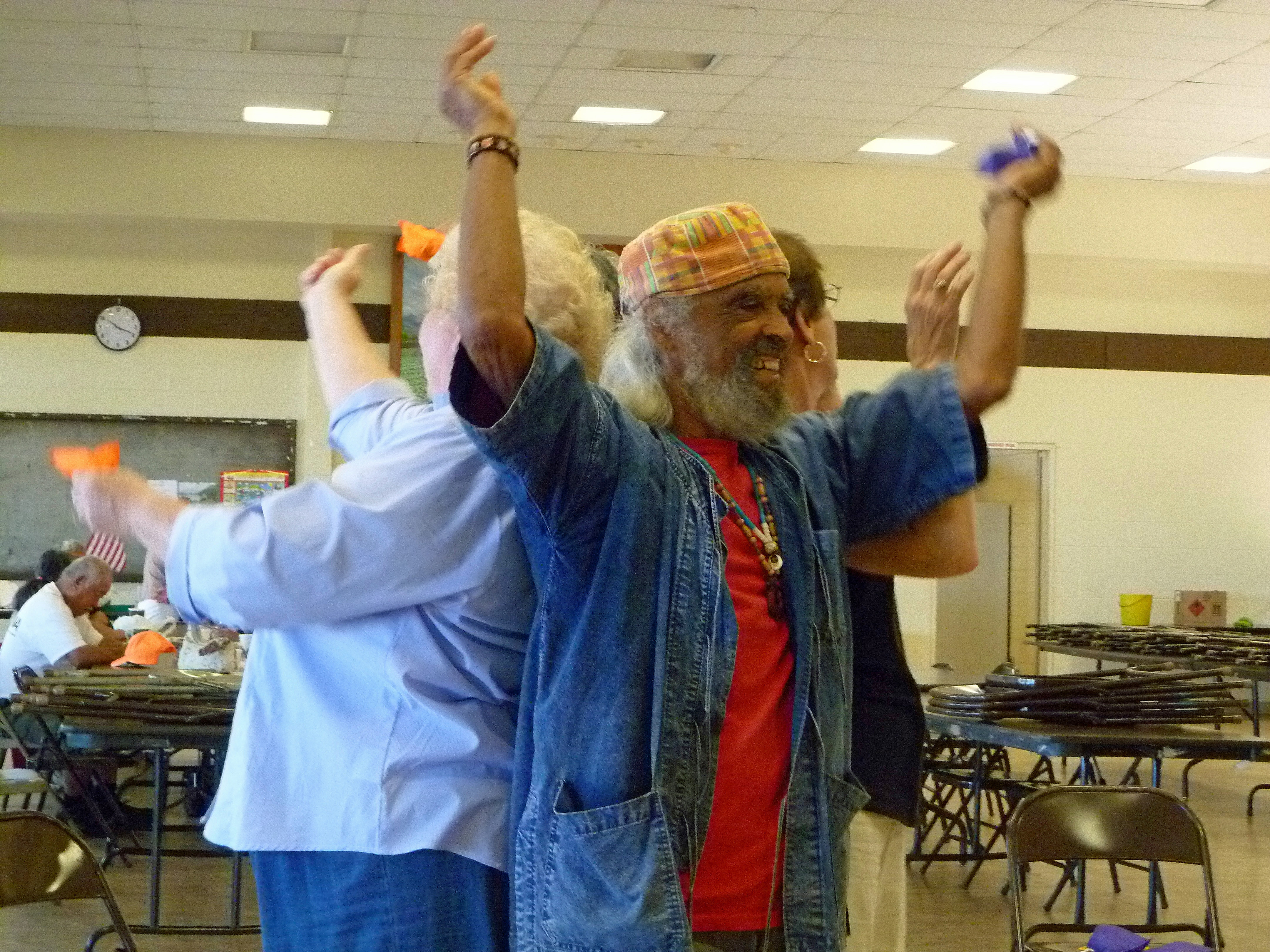
Recently, we ran a pilot project which saw the program being tailored to the cultural needs of the Hispanic community in Denver, Colorado. We trained 10 wonderful Hispanic women who will then go into the Denver community, hold the sessions in their homes, and enjoy the social side of exercising together.